
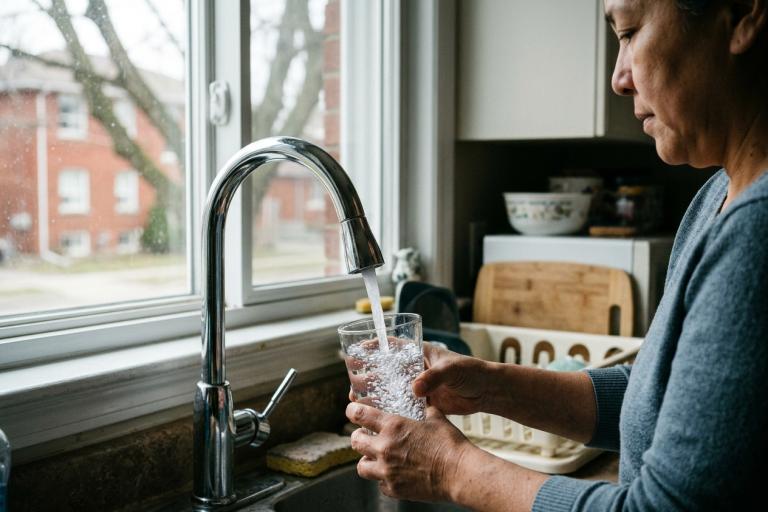
About your drinking water
The City of Wrenford draws its drinking water from the Tamsin River and treats it at the Tamsin River Water Treatment Plant before it reaches your tap. We take the safety and quality of your water very seriously. Our water meets or exceeds the standards set out in the Guidelines for Canadian Drinking Water Quality and the Ontario Ministry of the Environment, Conservation and Parks regulations.
How we monitor water quality
Our water quality team tests your water daily at the treatment plant and throughout the distribution system. We also run tests at sampling stations across the city. In a typical year, we collect thousands of samples and run tens of thousands of tests to check for:
- Microbiological safety (like E. coli)
- Chemical balance and treatment residuals
- Heavy metals and natural minerals
- Turbidity (how clear the water is)
All testing follows strict Canadian standards. The results are reviewed by our Water Operations Manager, Patrick Nguyen, and senior leadership before being made public.
Where to find water quality reports
We publish monthly summaries and an annual report each spring. You can view these reports on the Water Quality Reports page. These documents show exactly what we found in your neighbourhood, month by month.
If you want to see raw data or map results by street, visit the Drinking Water Source and Protection page for our watershed monitoring maps.
Understanding water hardness
Wrenford's water is considered "hard" because it flows over limestone and mineral-rich bedrock. Hard water contains higher levels of calcium and magnesium. This does not make the water unsafe to drink. In fact, these minerals are natural and harmless. However, hard water can leave a white mineral buildup on faucets, showerheads, and appliances, and it may take more soap to lather.
Water hardness changes with the seasons. Levels are typically lowest in late spring when snowmelt dilutes the river, and highest in late winter. If hard water causes issues in your home, you may want to look into a water softener. Please note that people on sodium-restricted diets should talk to their doctor before using salt-based softeners.
Fluoride and lead monitoring
Fluoride: We add fluoride to the treated water to help protect your teeth. The level is carefully controlled to stay within the recommended health guidelines.
Lead: We monitor lead levels in your water every year. If you have an older home with lead pipes or plumbing, you can join the free Tap Water Sampling Program. The programme runs from May to September. You can also book a free home water audit to check for leaks and test your plumbing. Visit the Water Conservation and Efficiency Toolkit for more home plumbing tips.
Boil water advisories
Occasionally, a main break or equipment failure can temporarily affect water pressure and quality. If we issue a boil water advisory, you will see a notice on your door and in the Service Alerts feed. You must boil water for at least one minute before drinking, cooking, or brushing your teeth. The advisory is lifted as soon as lab tests confirm the water is safe. If your water is shut off, we will send water tankers to your area.
Questions or concerns
If you have questions about your water quality, want to request a test, or need help reading a report, contact the Water Operations team. You can reach Water Operations Manager Patrick Nguyen at 519-555-0100 or email [email protected].