
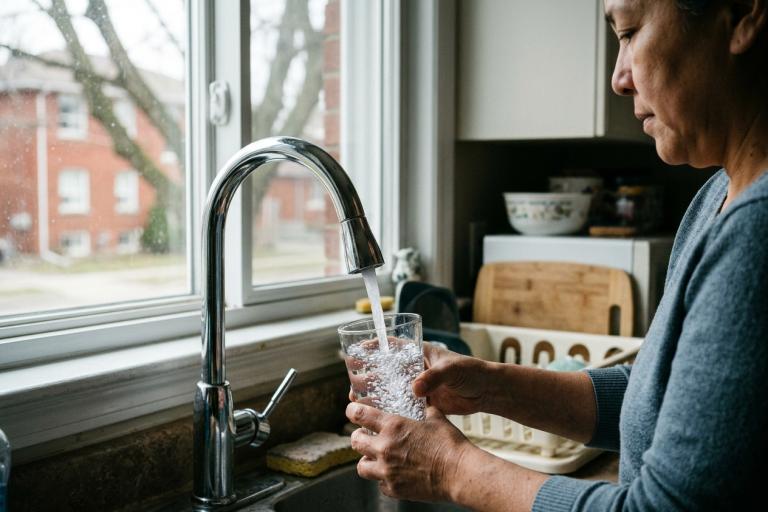
What is lead and why does it matter?
Lead is a naturally occurring metal found in soil and rock. It can also come from old plumbing and solder used in homes built before 1960. Over time, lead pipes can corrode and release small amounts of lead into your drinking water. Health Canada has identified lead as a main contaminant of concern because it can affect health, especially for young children and pregnant people.
Who is responsible for lead pipes?
The City is responsible for the water service line that runs from the water main in the street to your property line. Any pipes, solder, or fittings on your side of the property line are your responsibility. Most homes in Wrenford have copper or galvanized steel pipes, but if your home was built before 1960, it is worth checking.
How the City monitors lead
The City of Wrenford runs an annual Tap Water Sampling Program to check lead levels in drinking water across the city. The program helps us track water quality and ensures we meet provincial standards. We mail invitation letters to homes each year, with a focus on properties with known lead service lines or homes built before 1960.
How to book a free sample
If you would like to participate, you can request a free water sample between May 1 and September 30 each year. Appointments are scheduled on a first-come, first-served basis and last about 45 minutes. A City technician will collect a water sample from a kitchen faucet without filters or softeners.
- Call 311 (or 519-555-0100 from outside the city) and ask to register for the Tap Water Sampling Program.
- Book online through the Service Wrenford app or website.
- Visit the Service Wrenford counter at Wrenford City Hall to book in person.
You and the property owner will receive a letter with the results about three to four weeks after the sample is taken.
How to reduce lead exposure
If you are concerned about lead in your plumbing, you can take simple steps to lower your exposure while you wait for testing or pipe replacement.
- Flush your pipes: If water has been sitting for a few hours, run the cold tap for two to three minutes before using it. If it has been sitting for a few days, run it for three to five minutes. For vacant homes, flush for 20 minutes.
- Use cold water: Always use cold water for drinking, cooking, and making baby formula. Hot water is more likely to pull lead from your pipes. Boiling water does not remove lead.
- Check your filters: Consider using a water filter certified to NSF 53 standard for lead reduction. These come in pitcher, faucet-mounted, or under-sink models. The City offers a rebate of $200.00 for purchasing an NSF 53 certified filter, and a $350.00 rebate for professional installation. See Lead pipes and your water service for details.
- Hire a plumber: A licensed plumber can check your pipes and solder for lead. If you are renovating, make sure your contractor uses lead-free materials.
What the City is doing
Our water treatment plant adds caustic soda to balance the pH of our drinking water. This creates a protective coating inside the pipes and reduces corrosion, which helps keep lead from leaching into the water. We are also working with homeowners to identify and replace lead service lines. If you have questions about lead monitoring or need help, contact the Water Operations team at 311 or Water quality reports and monitoring.
Related information
Lead pipes and your water service
Water treatment process information
Water quality reports and monitoring
Boil water advisory information