
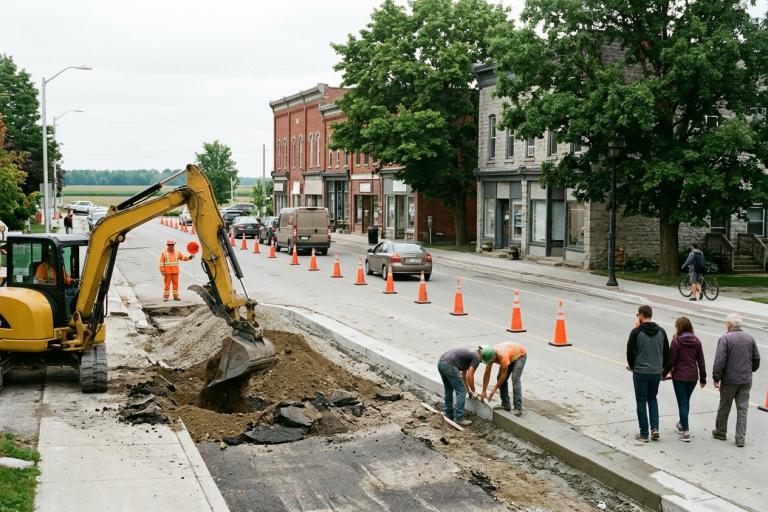
Why this matters for infill construction
Wrenford is growing, and we want you to build in our older neighbourhoods too. Whether you are adding a secondary suite, replacing a home in Old Mill, or building a duplex in Riverside Flats, you need to know how plumbing and gas work connects to city services. This page explains the permits, inspections, and rules for connecting your new or renovated building to the Tamsin River water and sewer system.
What your permit covers
One single construction permit covers all plumbing and gas work inside the building envelope. This includes:
- Natural gas lines
- Fireplaces
- Hydronics heating systems
- Groundwork and trenching
You can request inspections at any time, including during the pre-trench review and pre-board phases. If you plan to run gas lines to a remote meter, a detached garage, a patio, or a snowmelt system, you will need an additional plumbing permit. Hydronics systems that act as a primary heat source or serve a detached garage also require separate permits. If you are building a secondary suite over a garage, contact the planning team first.
Inspection stages
Plumbing and gas inspections follow three clear steps:
- Pre-trench review: We check the trench depth and bedding before you lay pipe.
- Pre-board inspection: Request this once all rough-in work is finished and before you close up the walls.
- Pre-possession inspection: Request this when construction is complete and the building is ready for occupancy.
Connecting to sanitary and storm services
When you connect to city lines, you have two options. The first is to hire a qualified Wrenford Quick Trench contractor. These contractors have a city agreement that lets them install services using offsite photo reviews. The second option is a site inspection by a Wrenford safety codes officer. Both methods meet code requirements. New single and semi-detached homes can use the quick trench program. All other projects need a separate plumbing or site servicing permit and required inspections.
Wrenford Quick Trench Program rules
If you use a qualified contractor, they handle the digging and pipe installation. Before filling the trench, the contractor must take clear photos and upload them as PDFs to the ePermit portal. Photos must show the site location, pipe size and material, and sidewalk marker boards. City inspectors audit the work. If the installation fails, we place a red sticker on the pipe, and you cannot backfill it.
Pipe and bedding standards
All pipes must meet the National Plumbing Code of Canada. Follow these key rules:
- Water service pipes must be at least 1 inch (25 mm) and certified for drinking water.
- Follow the grade slip issued by the city. If the slip asks for a larger pipe, use that size.
- Use crushed stone bedding. Do not use sand, clay, frozen chunks, or organic material. The material must be no larger than 0.75 inch (20 mm).
- Pipes need at least 4 inches (100 mm) of material underneath and 12 inches (300 mm) of cover over the top, extending 12 inches (300 mm) on each side.
- Frost protection requires 8.5 feet (2.6 metres) of cover for water lines and 4.5 feet (1.4 metres) for sewer lines.
- Slopes must be 1 in 50 for 3-inch pipes and 1 in 100 for 4-inch pipes.
- Limit bends to two 22.5-degree fittings or one 45-degree fitting per pipe run without adding a cleanout.
Construction heat and gas
For construction heat, Tamsin Valley Energy can install a meter once the foundation is backfilled, provided you paid the temporary gas fee on your construction permit. Wood masts must match city specifications. All hoses and heaters need a city inspection. Propane heat requires a separate temporary gas permit from a qualified gas fitter. The city does not cover propane under the standard construction permit.
Other infill considerations
If you subdivide an inner-city lot into two or more lots, each new lot needs a separate service line, as shown on the city grade slip. Gas appliance vents need a minimum 1.2 metres of side yard clearance from the building foundation to the property line. All irrigation lines, even those installed for future use, must have a double check valve assembly.
Need help?
For questions, email the plumbing and gas technical assistance centre at [email protected] or dial 311. You can also call the main line at 519-555-0100. Our team is available Monday to Friday, 8:30 a.m. to 4:30 p.m. at Wrenford City Hall.