
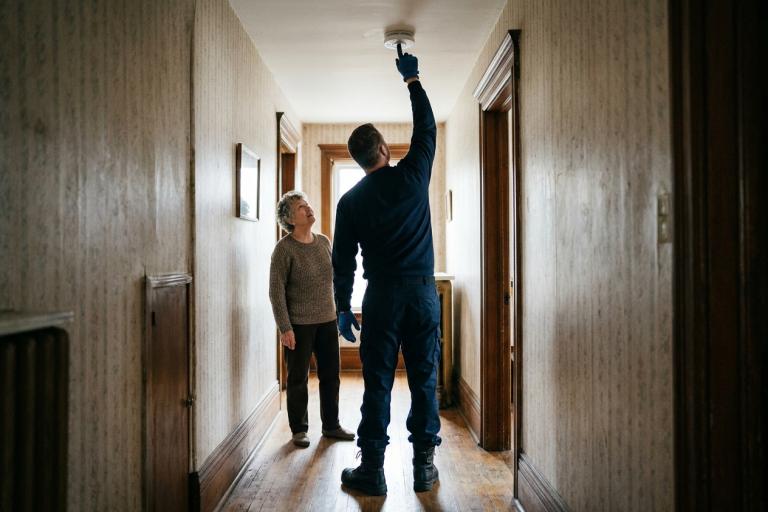
Why smoke alarms matter
Working smoke alarms give you the earliest possible warning if a fire starts. Inhaled smoke can overwhelm you before you wake up or escape. A properly installed and maintained smoke alarm is your best chance at staying safe.
Where to install your alarms
Place at least one smoke alarm on every level of your home, including the basement. You should also install one inside every bedroom or just outside every sleeping area. Keep bedroom doors closed while you sleep. This simple habit can slow the spread of smoke and heat.
Testing and maintaining your alarms
You should test your smoke alarms once a month. Press the test button and listen for the loud alarm sound. If your alarm uses replaceable batteries, change them at least once a year or when it chirps to warn you. A good time to change batteries is during the spring and fall daylight saving time changes.
Dust and debris can block the sensors. Vacuum the outside of your alarm with a soft brush attachment every six months. Do not paint or cover your alarms.
Choosing the right alarm
There are different types of smoke alarms. Ionization alarms react quickly to fast-flaming fires. Photoelectric alarms are better at detecting slow, smouldering fires that produce more smoke. For the best protection, install both types in your home or use a dual-sensor alarm. Look for a product tested by a recognized safety laboratory.
When to replace your alarm
Smoke alarms expire after ten years. Check the back of the unit for the manufacture date. If it is ten years old or older, or if you cannot find the date, replace it with a new one. Even hard-wired alarms need to be replaced after ten years.
Carbon monoxide alarms
Carbon monoxide (CO) is a colourless, odourless, and tasteless gas. It can make you sick or even kill you. Install a carbon monoxide alarm on every level of your home, especially near sleeping areas. Replace the alarm according to the manufacturer's instructions, usually every five to seven years.
Assistive alerting devices
If you are Deaf or hard of hearing, standard smoke alarms may not be enough. The Wrenford Fire Prevention Office provides free assistive alerting devices to eligible residents. These devices use flashing lights and vibrating pads to warn you of smoke or carbon monoxide.
Contact the Fire Prevention Office
Visit Fire Station 1 (Headquarters) at 210 Water Street to speak with our fire prevention staff. We can answer your questions about alarm installation, conduct free home safety checks, and help you arrange for assistive alerting devices.
Hours: Monday to Friday, 8:30 a.m. to 4:30 p.m.
Phone: 519-555-0115