
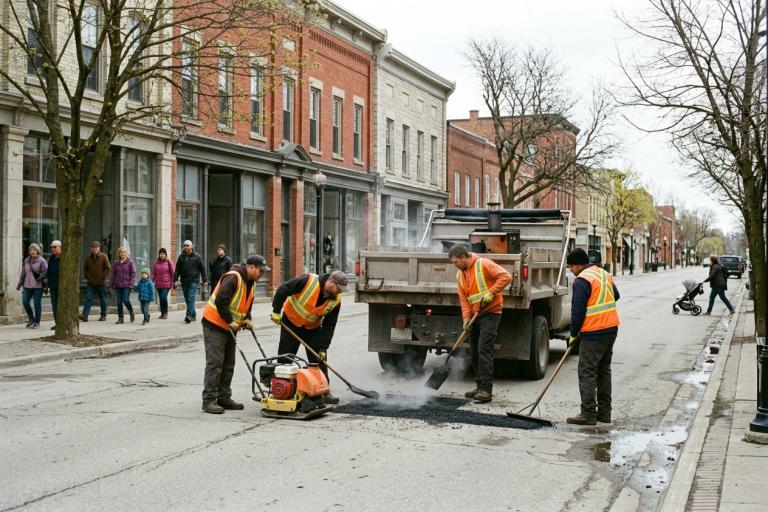
Why potholes form
Wrenford's freeze-thaw cycles take a toll on our streets. Moisture seeps into tiny cracks in the asphalt. When the temperature drops, the water freezes and expands. When it warms up, the ice melts. Over time, this weakens the road surface. When vehicles drive over these weakened spots, pieces of asphalt break away, leaving a pothole.
This is a normal part of spring and autumn in Southwestern Ontario. Our crews work through the winter to do temporary patching when roads are clear, but permanent repairs happen once the ground is dry and warmer weather arrives.
How to report a pothole
You can help us keep Wrenford's roads safe by reporting problems as soon as you see them. The fastest way to submit a report is to call 311 if you are inside city limits. You can also call our main line at 519-555-0100 or visit the Civic Operations Centre at 455 Railside Road during business hours.
You can also send a report with the form below.
When you report a pothole, please tell us:
- The exact street name and nearest cross street
- The side of the road (left or right)
- The approximate size (small, medium, or large)
- How deep the hole is
If you can safely do so, a photo of the pothole helps our crews plan the repair. You can email photos to [email protected]. Emails sent after 4:30 p.m. or on weekends will be reviewed on the next business day.
How we prioritize repairs
Our Roads and Winter Maintenance team uses a priority system to decide which potholes to fix first. We look at the size of the hole, how deep it is, and how much traffic travels over it.
- High priority: Potholes on major roads, near intersections, or in bike lanes that pose an immediate safety risk. These are usually repaired within five business days of inspection.
- Medium priority: Potholes on residential streets with steady traffic. These are generally repaired within one to two months.
- Low priority: Potholes in quiet neighbourhoods, cul-de-sacs, or back lanes. These are scheduled based on overall demand and available crews.
Inspections typically happen within ten to fourteen business days after you report a problem. Timelines can change depending on weather, crew availability, and how many other repairs are needed.
Safety tips and sinkholes
Driving over a pothole can damage your tires, wheels, and suspension. Slow down when you see a pothole, and avoid swerving suddenly to hit it. If you are a cyclist or motorcyclist, give the pothole a wide berth.
Sinkholes are different from potholes. A sinkhole happens when the ground underneath the road washes away, causing the surface to collapse. They are often caused by water main breaks, heavy rain, or construction. Sinkholes can look small on the surface but hide a large void below.
If you see a sinkhole that looks like it could collapse or cause an accident, call 911 right away. Do not drive through or stand near the edge. If there is no immediate danger, report it through 311 so our crews can assess the site.
Spring Road Repair Program
Every spring, the City launches the Spring Road Repair Program to tackle the damage left by winter. This program focuses on permanent patching, crack sealing, and resurfacing. We also use this time to fix drainage issues that cause water to pool on streets. Check the Service Alerts page for updates on which neighbourhoods are scheduled for repairs each week.
Contact Roads & Winter Maintenance
For questions about road work in your area, contact the Roads & Winter Maintenance section. You can reach the team at 519-555-0112 or visit the Civic Operations Centre at 455 Railside Road, Monday to Friday, 7:00 a.m. to 3:30 p.m.